The Fairy Steeds of Wales: Are Corgis Actually Magical Warriors or Just Short-Legged Chaos Potatoes?
Published: 2026-02-22
Welcome, fellow Corgi-obsessives, to the ultimate deep-dive into the most majestic, vertically challenged creatures on the planet.
If you’ve ever looked at your Pembroke Welsh Corgi and wondered why they behave like a retired war hero trapped in a loaf of bread, you aren’t alone. While the rest of the world sees a dog with the turning radius of a semi-truck and the bark of a much larger animal, we know the truth.
The legend tells us that these dogs weren’t just “bred”; they were gifted. We’re talking about the corgi fairy saddle markings meaning legend that has haunted Welsh hillsides for centuries—or at least since 1946. Today, we’re peeling back the layers of the “fairy steed” myth to see how science, history, and a little bit of elven magic created the perfect herding machine.
The 1946 “Ancient” Legend: The Biddlecombe Revelation
Most “ancient” legends are hundreds, if not thousands, of years old. But Corgi people? We’re efficient. Our favorite origin story actually traces back to a 1946 poem titled “Corgi Fantasy” by Anne G. Biddlecombe. In this pivotal literary moment, Biddlecombe described how two children found fox-like puppies in a hollow and brought them home, only for their father to recognize them as gifts from the “wee folk.”
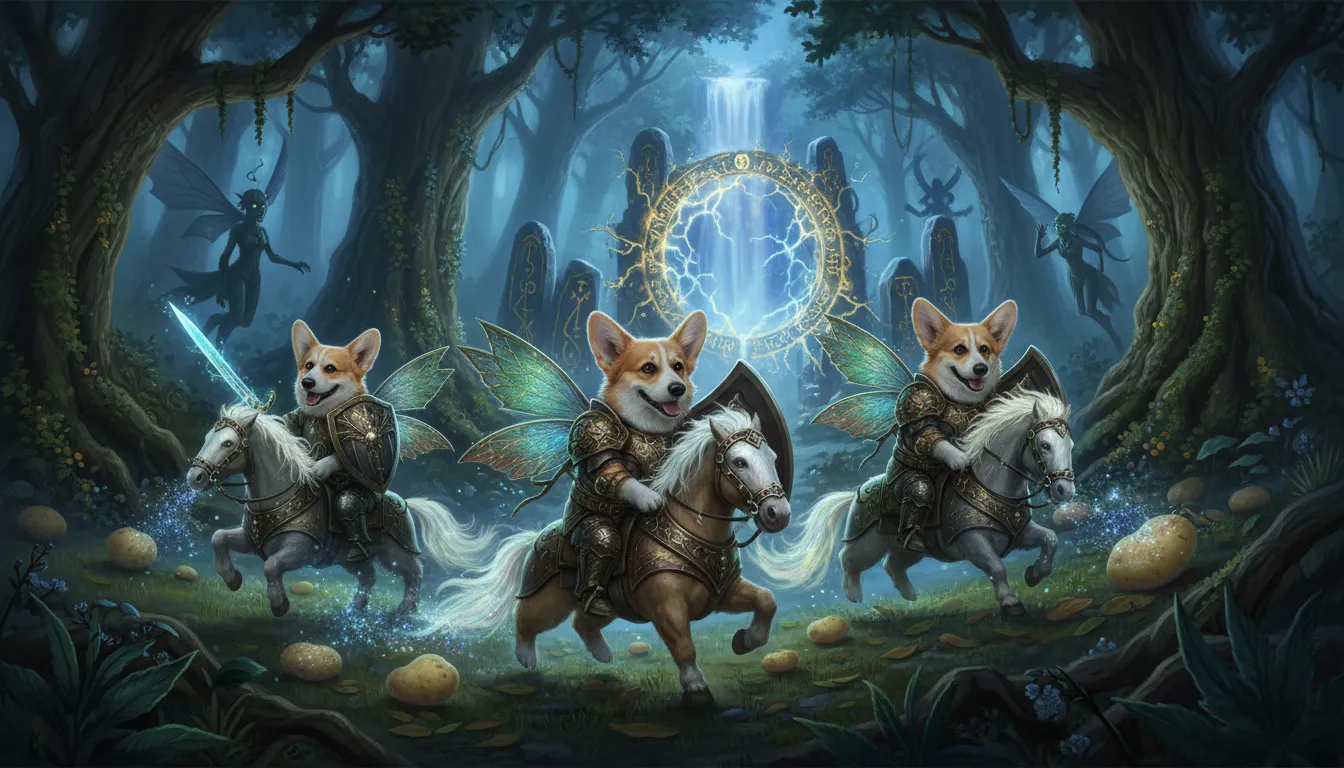
According to this legend, the fairies used Pembrokes to pull fairy coaches and act as noble steeds for fairy warriors. It was this poem that first popularized the idea that the corgi fairy saddle markings meaning legend isn’t just a quirk of fur—it’s the permanent imprint of a tiny, supernatural harness. While some buzzkill historians point out that there isn’t much written record of this before the 20th century, we enthusiasts know that the fairies probably just had a very strict non-disclosure agreement until the 1940s.
The Great War: Welsh Folklore Tylwyth Teg vs Gwyllion War
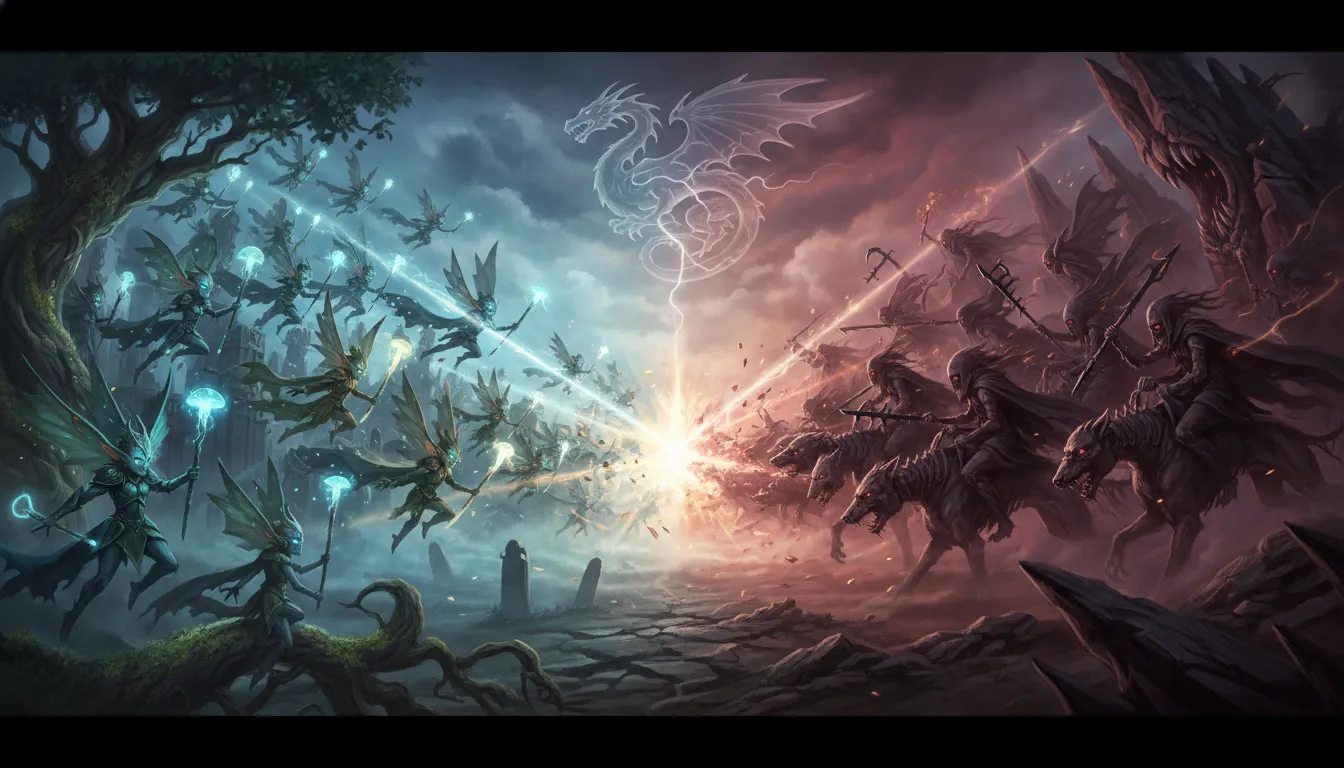
If you think your Corgi is dramatic because you’re five minutes late with dinner, imagine them on a literal battlefield. One of the deeper cuts of Corgi lore involves the welsh folklore tylwyth teg vs gwyllion war. The Tylwyth Teg (the “Fair Family” or the “good” fairies) were supposedly locked in a brutal conflict with the Gwyllion—the creepy, mountain-dwelling hags who delighted in confusing travelers and causing general mayhem.
Legend has it that during this war, Corgis served as the primary battle mounts. They were the tanks of the fairy world. Why? Because their low center of gravity made them nearly impossible to knock over, and their “nipping” instinct was originally a combat tactic used to disable the mountain hags’ steeds. When two Tylwyth Teg warriors fell in battle, the tribe reportedly gifted their noble steeds to human children. The fairy representative told the kids that while the dogs were “trained warriors,” they were also “great helpers” who could help humans herd cattle. This explains why your Corgi treats the vacuum cleaner like a mortal enemy; they’re just waiting for it to reveal itself as a mountain hag in disguise.
The Genetics of Magic: How the Corgi Got Its Short Legs (Scientifically)
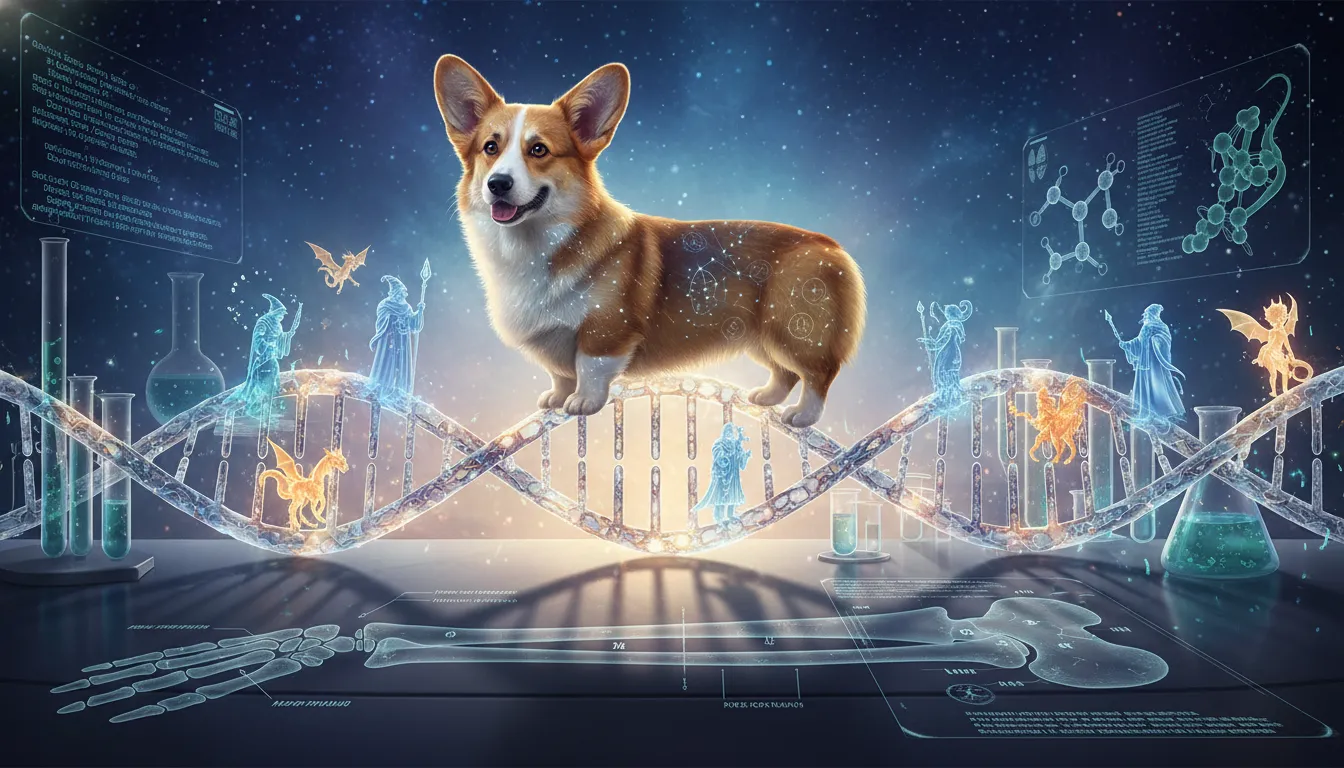
As much as we love the idea of fairies selectively breeding dogs for saddle-readiness, science has a slightly more “DNA-heavy” explanation. If you’ve ever Googled how the corgi got its short legs genetics, you’ve probably stumbled upon the word “chondrodysplasia.” In the Corgi world, we don’t call it a defect; we call it a tactical advantage.
The Corgi’s iconic silhouette is caused by a mutation in the FGF4 (fibroblast growth factor 4) gene on chromosome 12. This specific mutation causes the growth plates in their legs to close earlier than the rest of their body, resulting in those adorable drumsticks. In human terms, it’s a form of hypochondroplasia. Evolutionarily, this was genius. Early Welsh farmers needed a dog that could nip at the heels of a 1,200-pound cow but was short enough to duck under the inevitable retaliatory kick. The Corgi is basically a low-profile sports car designed for the high-stakes world of bovine management.
Barking at the Beyond: Why Do Corgis Bark at Nothing Fairy Theory?
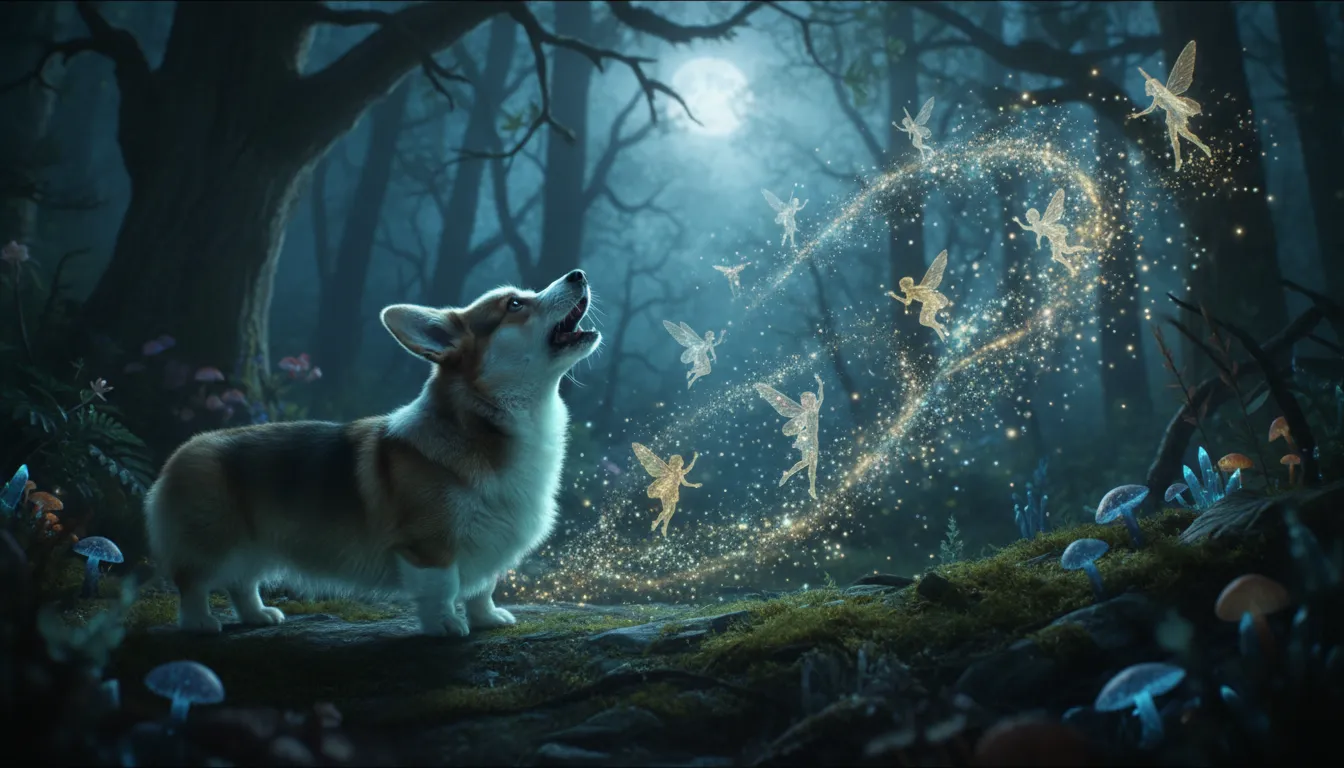
Every Corgi owner knows the “slumber-shattering woof.” It usually happens at 2:00 AM in a perfectly silent room. While your neighbors might call it “nuisance barking,” we prefer to look at the why do corgis bark at nothing fairy theory.
Folklore suggests that Corgis have “fairy sight,” an ability to see ghosts, spirits, and invisible travelers that humans are too dull to perceive. In the old days, a Corgi barking at an empty corner was seen as a warning that a mountain spirit was trying to sneak into the house. Ethologically, we know that Corgis are “watch curs” with ears that function like high-definition radar dishes. They aren’t barking at nothing; they’re barking at a squirrel three blocks away that is thinking about trespassing. But honestly, “defending the homestead from mountain spirits” sounds much more prestigious on a resume.
The Science of the Zoomies: Understanding FRAPs
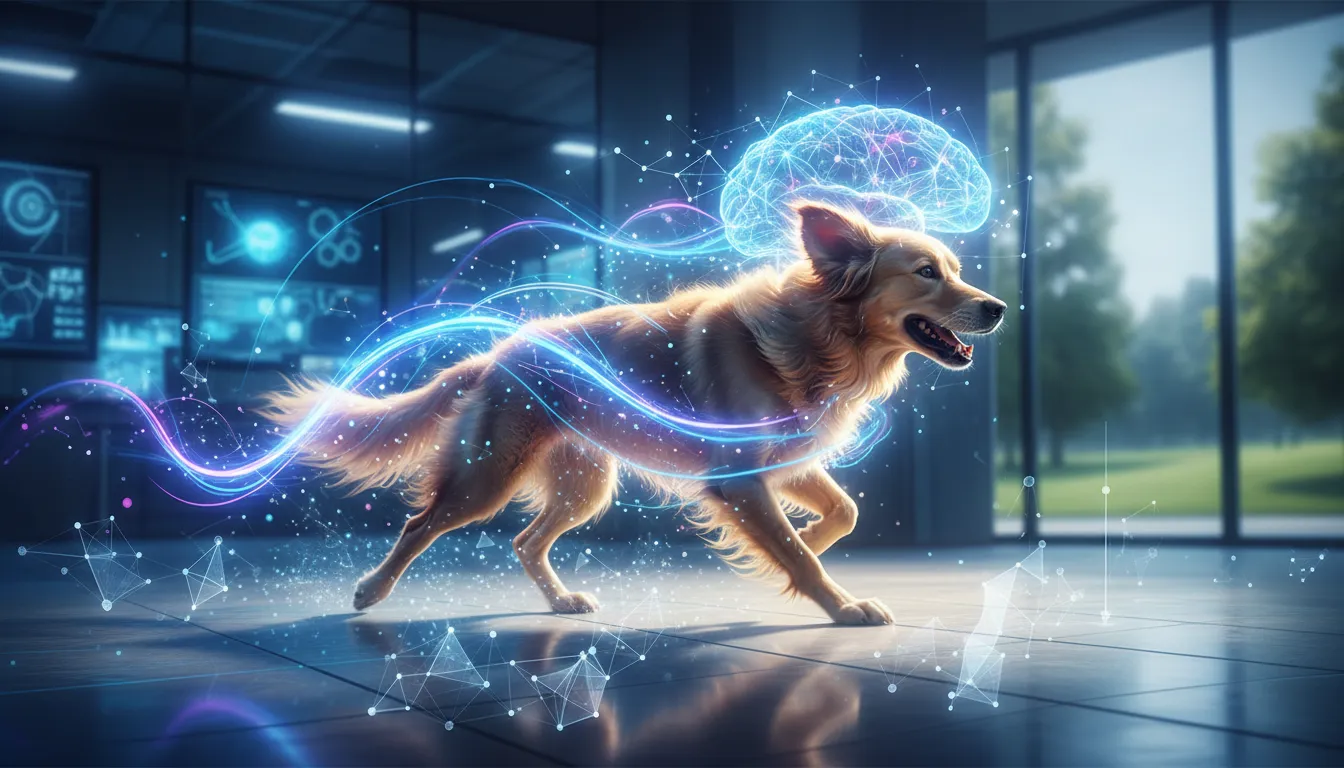
We’ve all seen it: the sudden, frantic explosion of energy where your Corgi turns into a furry orange blur, bouncing off the sofa and drifting around corners like they’re in a Fast & Furious movie. While we might call it “demon possession” or “the midnight madness,” the scientific name for corgi zoomies is actually FRAPs—Frenetic Random Activity Periods.
Biologically, FRAPs are a way for high-energy herding dogs to release pent-up cortisol or sheer excitement. It often happens after a bath (to reclaim their “natural” scent) or after a particularly satisfying poop (science calls this the “vagus nerve” response, but we call it a victory lap). Whether it’s an oxytocin surge from seeing you home from work or just a release of “I’ve-been-napping-for-six-hours” energy, the zoomie is the purest expression of Corgi joy. It’s also the moment when they most resemble their ancient fairy steeds, flying across the living room carpet as if carrying an invisible rider to a midsummer ball.
The High Cost of Being Indispensable: The Laws of Hywel Dda
Our love for Corgis isn’t just a modern internet trend; it’s literally written into ancient law. In the 10th century, King Hywel Dda (Hywel the Good) codified the laws of Wales, and he was surprisingly specific about dogs. In corgi herding dog history Hywel Dda is a major figure because his laws recognized the “cur” (a working dog) as a vital economic asset.
Back then, a proficient herdsman’s dog was legally valued as much as an ox. That is a massive valuation for a dog that stands ten inches tall. The law listed the three “indispensables” for a summer resident: a shelter, a knife, and a herdsman’s cur. If someone stole your Corgi in 920 AD, they weren’t just taking a pet; they were stealing your livelihood, and the fines were steep. This high status explains the “Corgi Attitude”—they’ve known they were worth an ox for over a thousand years, and they haven’t forgotten it since.
The Royal Connection and the “Dorgi” Experiment
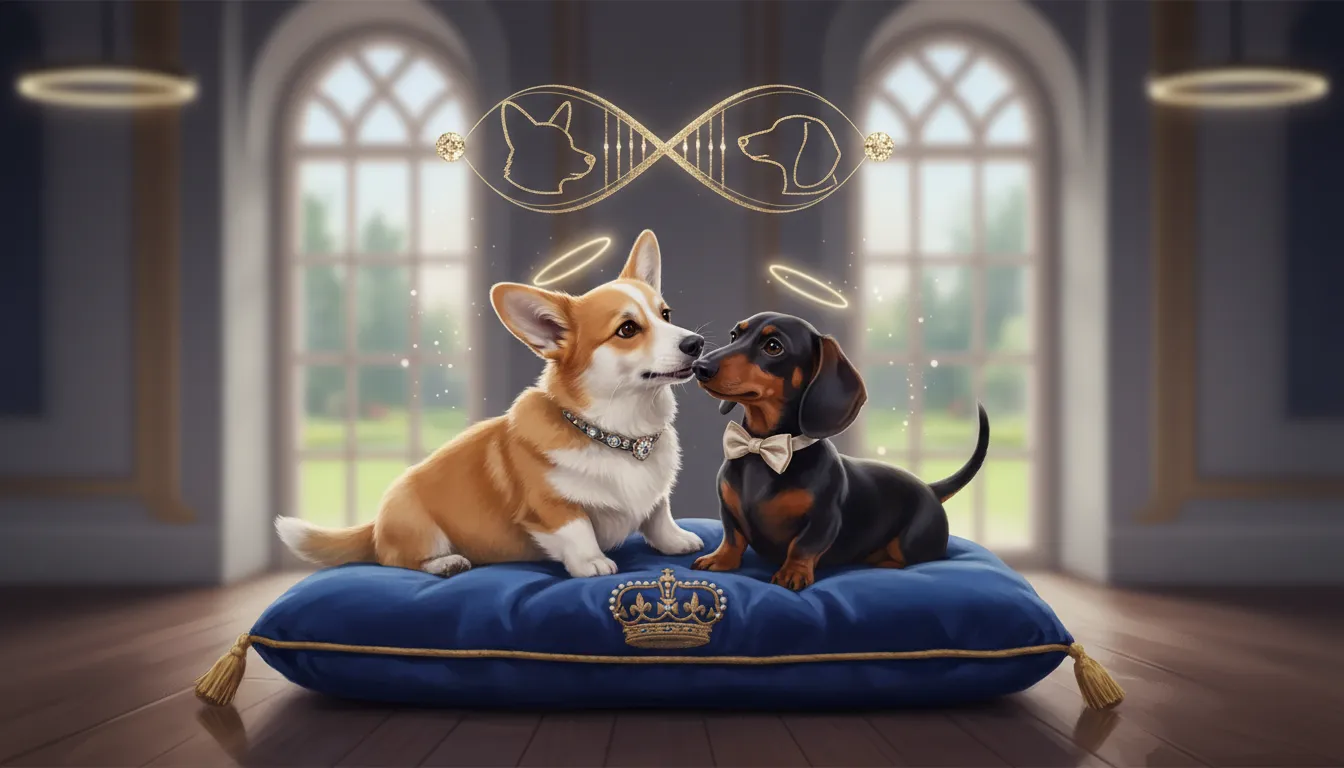
We can’t talk about Corgi history without mentioning the late Queen Elizabeth II. She owned over 30 Pembrokes during her reign, starting with Susan, who was an 18th-birthday gift. The Queen was even a bit of a genetic rebel, helping create the “Dorgi”—a Corgi-Dachshund cross—after an unplanned romance between her Corgi and Princess Margaret’s Dachshund, Pipkin.
This royal patronage did more than just make the breed famous; it cemented their status as “regal” dogs. It’s a hilarious irony: the dog bred to nip cow heels in the mud of Pembrokeshire ended up sleeping on silk cushions in Buckingham Palace. But if you ask a Corgi, they’ll tell you they deserve it. They are, after all, the only breed with the “bombastic side-eye” powerful enough to intimidate a world leader.
Conclusion: Living with a Legend

Whether you believe they were created from starlight on a midsummer night or recognize them as the result of a lucky FGF4 mutation, there is no denying that life with a Corgi is an adventure. They are a “big dog in a small body,” a warrior in a potato suit, and a loyal friend who will guard your home from mailmen and malevolent mountain hags alike.
So, the next time your Corgi does a “sploot” (that adorable splayed-leg stretch) or barks at a suspicious-looking shadow, remember their heritage. They are the descendants of fairy steeds and the “indispensables” of ancient kings. Treat them well—mostly with treats—because you never know when their fairy riders might come back and ask for an update on their favorite noble mounts.
And remember: the saddle on their back isn’t just fur. It’s a reminder that even the smallest among us can carry the weight of a kingdom—or at least the weight of a very enthusiastic 30-pound dog.
Follow Our Corgi Adventures!
Pinterest
Instagram
TikTok
YouTube