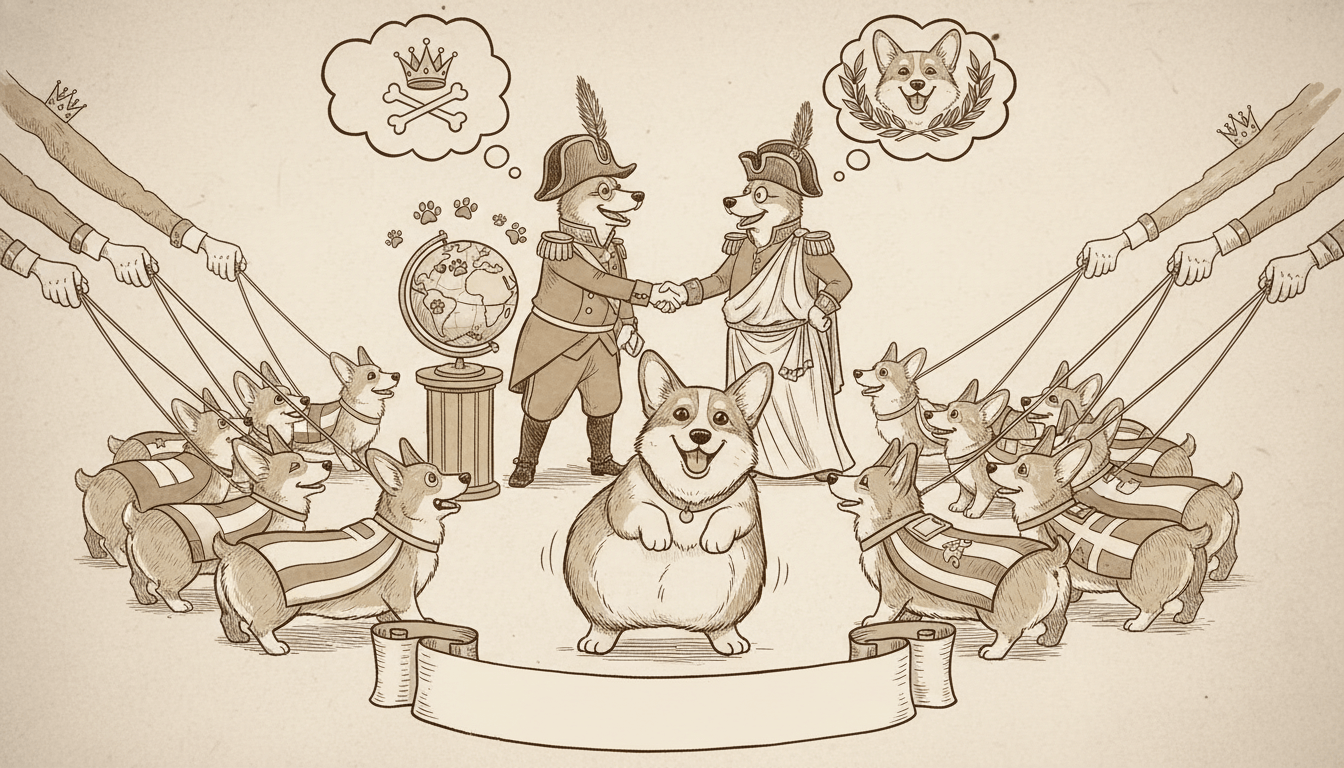
The Geopolitics of the Butt-Wiggle: A Satirical Analysis of Corgi-Mediated Diplomacy
Published: 2026-02-02
In the high-stakes world of global summitry…
Where nuclear-armed leaders bicker over trade tariffs and climate goals, the world often teeters on the brink of total chaos. We’ve tried everything: treaties, sanctions, strongly worded letters, and even awkward “family photos” at G7 retreats. But as we move into 2026, a new hero has emerged to save the world order, and it doesn’t wear a suit. It has four stubby legs, ears that can hear a cheese wrapper from three miles away, and a rear end that defies the laws of physics.
Welcome to the era of the Corgi as a “Butt-Wiggle” Ambassador.
While the rest of the world sees a cute, fluffy loaf of bread with a pulse, seasoned geopolitical analysts recognize the Pembroke Welsh Corgi for what it truly is: a biological peace-keeping machine. The “butt-wiggle” isn’t just a sign that your dog is happy to see you; it is a complex, non-verbal diplomatic maneuver designed to achieve the kind of total de-escalation that human diplomats can only dream of.
The Science of the Sway: Why Do Corgis Wiggle Their Butts?
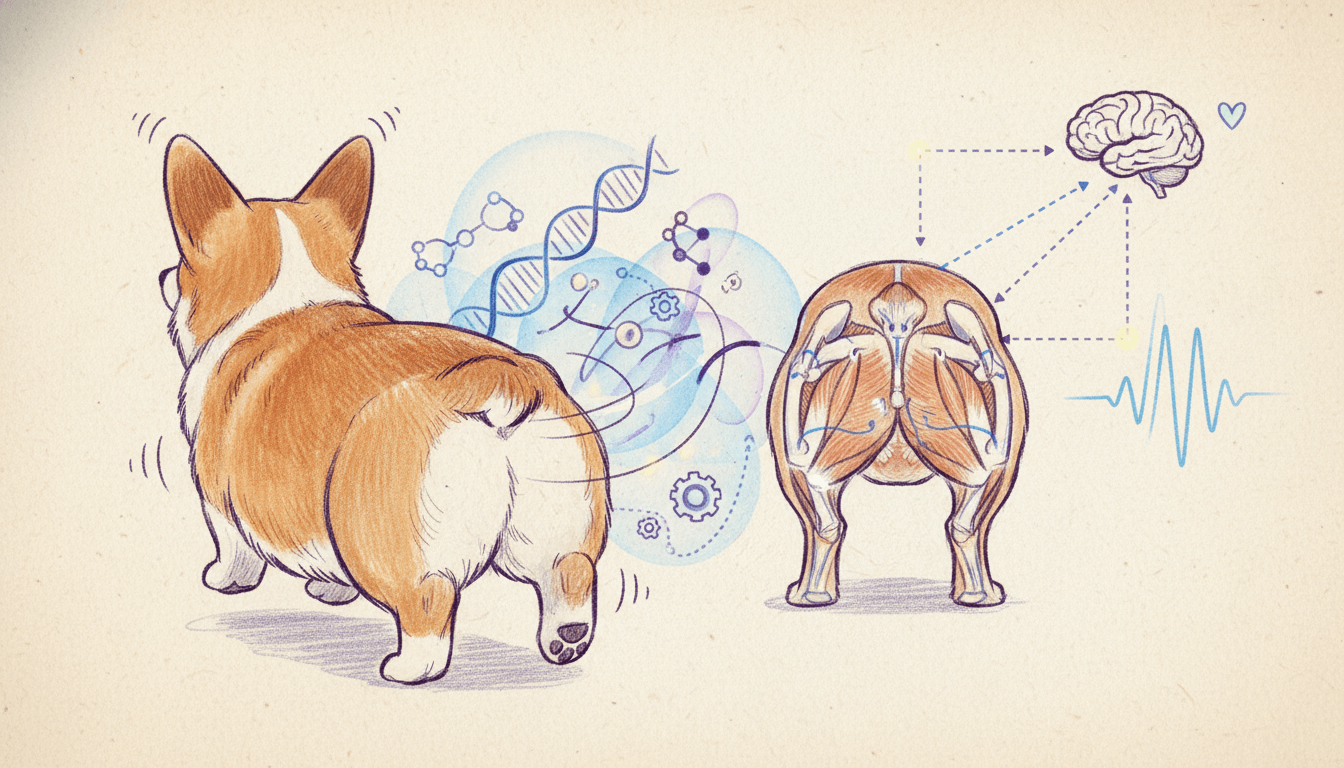
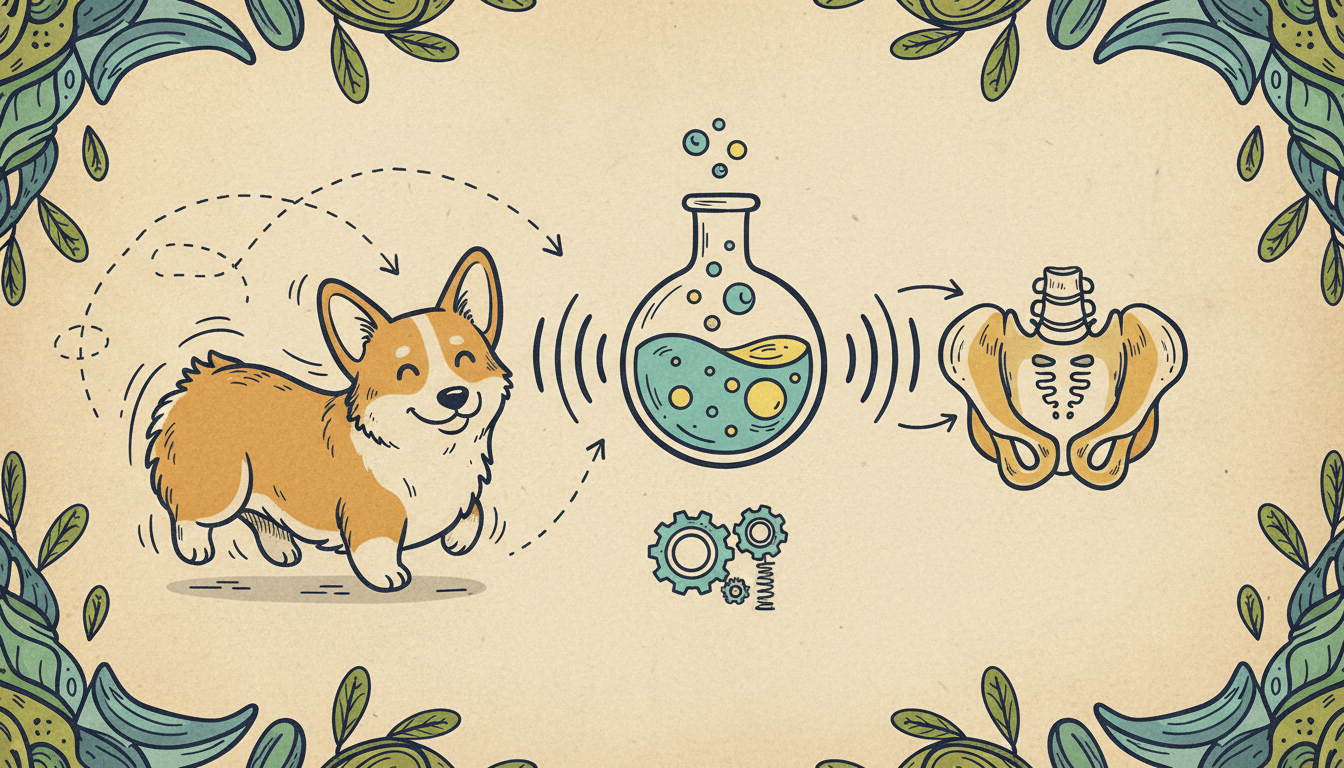
To understand the power of the wiggle, we must first look at the corgi anatomy facts that make this movement possible. You might find yourself asking, why do corgis wiggle their butts with such reckless abandon? The answer lies in a genetic masterpiece known as chondrodysplasia. This is a fancy corgi butt wiggle scientific name for a specific type of achondroplastic dwarfism that was selectively bred into the Pembroke Welsh Corgi over hundreds of years.
Governed by the dominant FGF4 gene, this condition ensures that while the corgi’s spirit is that of a majestic wolf, its legs remain roughly the length of a stack of pancakes. Because they are essentially “rear-wheel drive” creatures, their lack of a traditional tail means they must use their entire posterior to communicate. When a corgi gets excited, they engage their pelvic diaphragm—specifically the levator ani and coccygeus muscles—to create a vigorous hip sway known in some high-level German diplomatic circles as the “Wackelarsch.”
This wiggle acts as an “active appeasement” signal. In the animal world, this is a distance-decreasing behavior that signals peaceful intent. In a G7 summit, when a Corgi Ambassador enters the room and begins the sacred wiggle, it forces world leaders to abandon their posturing. You cannot maintain a trade war when a “waggle nub” is vibrating at 40 Hz in your general direction. It is biologically impossible to remain aggressive in the presence of such rhythmic floof.
The Windsor Precedent: How the Queen Revolutionized Soft Power
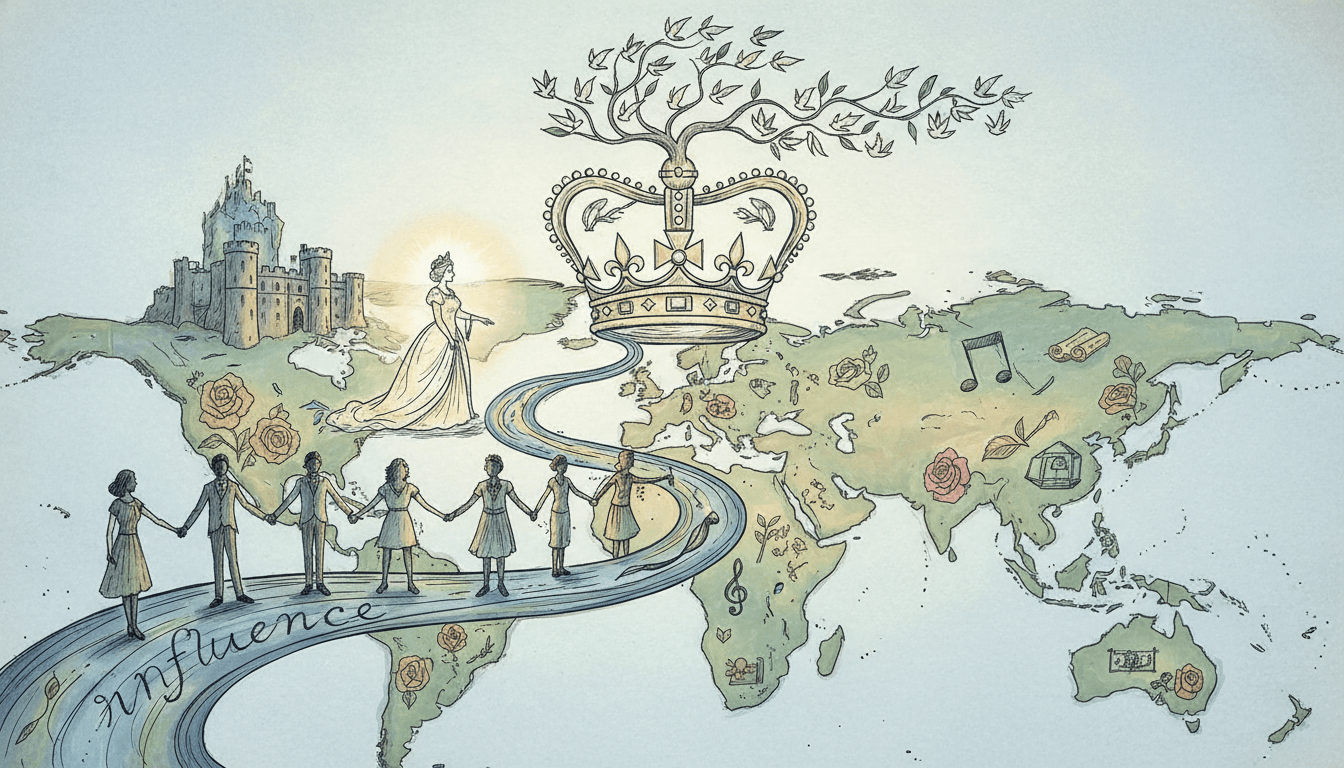
The institutionalization of the corgi as a diplomatic asset isn’t a new fad; it’s a royal tradition. It all started with Susan, the foundation of the late Queen Elizabeth II’s royal breeding program. Susan was an 18th birthday gift from King George VI, and she was so essential to the Queen’s diplomatic “inner circle” that she was famously hidden under blankets in the royal carriage during the Queen’s honeymoon with Prince Philip.
Over her seventy-year reign, the Queen owned more than 30 corgis, utilizing them as what Princess Diana called “moving carpets.” These dogs were more than pets; they were the ultimate icebreakers. Whether appearing in official portraits or starring alongside James Bond in the 2012 Olympics, the royal corgis proved that a well-timed “loaf” could do more for British soft power than a thousand ambassadors in top hats.
Key Diplomatic Assets of the Royal Household:
- Dookie (1933): The first royal Pembroke who established the Windsor-Corgi alliance.
- Susan (1944): The matriarch of the dynasty who practically co-authored the rules of canine diplomacy.
- Muick & Sandy: The final generation of ambassadors who maintained the “wiggle” during the transition to the 2020s.
Decoding the Diplomatic Dialect: Sploots, Momos, and Frapping
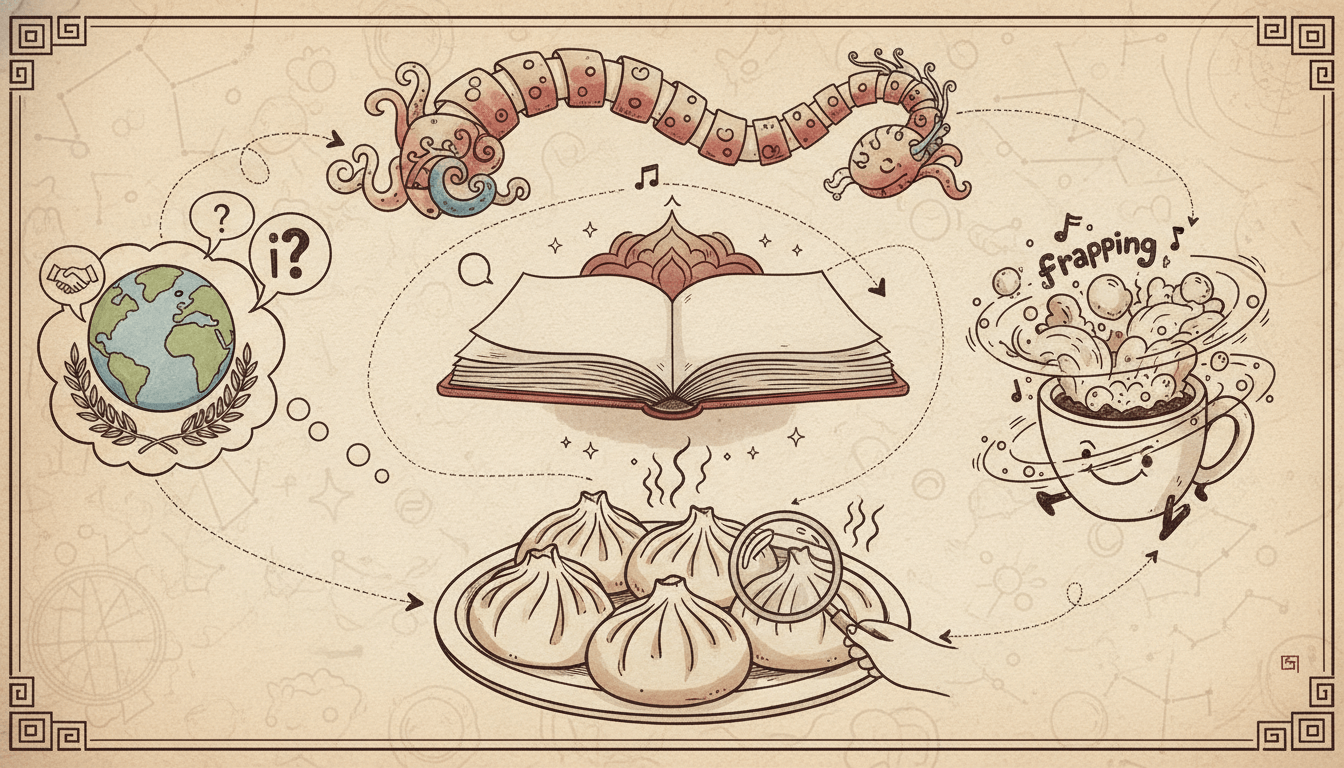
To truly understand the Corgi Ambassador, one must master the nuances of DoggoLingo, the specialized auxiliary language used in the corgi community. Each gesture has a specific meaning in the world of non-verbal diplomacy:
- The Sploot: This occurs when a corgi lies flat on its stomach with hind legs stretched out like a pair of roasted turkey drumsticks. In diplomatic terms, corgi sploot meaning translates to “Total Transparency.” It signals that the ambassador has nothing to hide and is ready for a nap-based negotiation.
- The Loaf: When the legs are tucked entirely beneath the body, the corgi takes the form of a perfect sourdough loaf. This is the “Seated Summit” posture, indicating stable, cautious deliberation.
- The Momo: This is the slang term for the corgi’s rear end, which famously resembles a heart-shaped peach. A prominent Momo display during a press conference is the ultimate signal of goodwill.
- Frapping: This stands for “Fun Random Acts of Play” (or Frantic Random Acts of Play). When an ambassador begins corgi frapping, it is a rapid-response maneuver intended to burn off diplomatic tension through high-speed, chaotic circles.
The “Floating Butt” Theory: Buoyancy in International Waters
One of the most remarkable corgi anatomy facts is the “floating butt” phenomenon. If you’ve ever seen a corgi in a swimming pool, you’ve noticed that their rear ends bob on the surface like a cork. This is due to a massive ribcage relative to their size and a strategic distribution of fluff and fat around the hindquarters.
In the realm of global relations, this “inherent buoyancy” serves as a powerful metaphor. No matter how deep the geopolitical waters get, the Corgi Ambassador stays afloat. This makes them ideal for maritime diplomacy or climate change summits, where they can bob peacefully between delegates, reminding everyone that we’re all in the same pool together.
Maintaining the Asset: Security Risks and Health Protocols
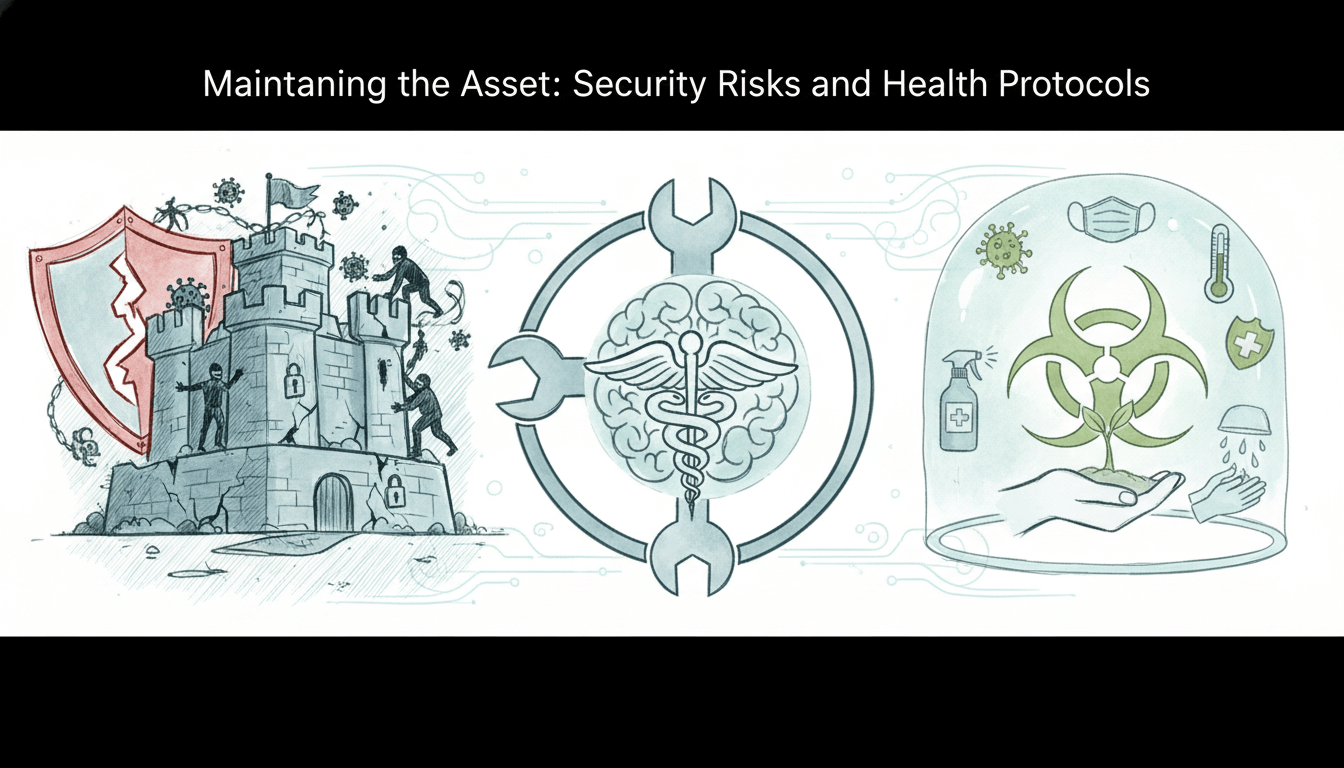
Even the most elite ambassador is subject to the frailties of biology. Because of their unique “long and low” design, the Corgi Ambassador faces several “security risks” that can compromise their mission. Corgi health problems are the primary threat to world peace.
- IVDD (Intervertebral Disc Disease): Their long spines are prone to “asset degradation.” To prevent this, diplomatic headquarters must be equipped with ramps to all sofas and thrones to avoid the spinal shock of jumping.
- The Obesity Crisis: A corgi is effectively a “food vacuum” with legs. Obesity puts immense strain on the ambassador’s chassis, potentially leading to arthritis or hip dysplasia. A “regal diet” of lean proteins—steak, rabbit, or chicken—is mandatory to keep the wiggle at peak performance.
- Hip Dysplasia: While a vigorous wiggle is the goal, a “clunky” wiggle can be a sign of joint issues. It’s important to remember that “dwarf hips” often look different on X-rays, and what looks like a problem to a regular vet is often just the standard-issue suspension of a master-class herding dog.
Summary of the Wiggle-Based World Order
As we look toward the future of international relations, it is clear that the old ways are failing. We need a diplomacy that is soft, low to the ground, and highly motivated by cheese. The “butt-wiggle” is not just a quirk of evolution; it is a universal language of joy and de-escalation that transcends borders.
By following the “Windsor Protocol” and respecting the delicate mechanics of the corgi sploot, world leaders might finally find the “sustainable connections” they’ve been looking for. The next time you see a corgi wiggling down the street, don’t just see a dog. See an ambassador. See a peacemaker. See the only creature on Earth capable of ending a war by simply lying down and looking like a piece of bread.
In the wiggle we trust.
Follow Our Corgi Adventures!
Pinterest
Instagram
TikTok
YouTube